Pussy Hats
Is resistance cringe?

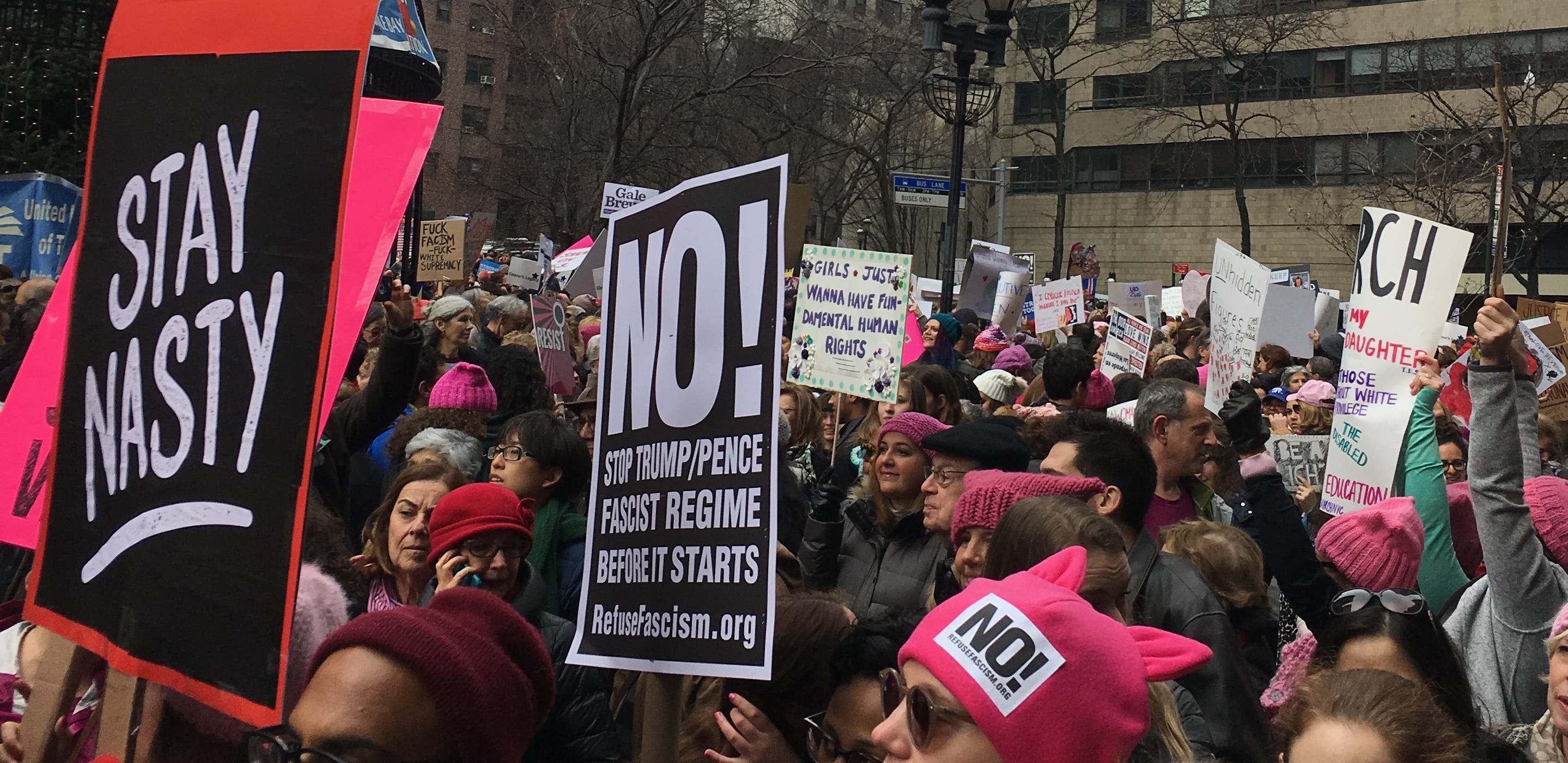
This weekend I found myself thinking back to the 2017 Women’s March. Specifically, the pink pussy hats we wore to #resist.
Yes, whether you’d like to admit it or not, many of us did. And not only did we wear them, we were excited about wearing them.
They were regarded, then, like the noble centerpiece of our protest uniforms. A sartorial symbol that quickly and efficiently showed how united we were against fascism. The fervor around these woven accessories made it seem like they might be part of our lives forever, as if they’d be granted permanent residence on a hook by our front doors so that every time the Resistance Bat Signal flashed in the sky, we’d be able to quickly grab them on our mad dash to the latest protest. They were surely, at the very least, destined for a spot in the Smithsonian.
Time has not been good to these pussy hats.
Today they seem to carry the cache of concert merch from a one hit wonder’s first and only world tour, far enough in the past to be outdated, but not far enough to be camp. More likely to be hung in a costume designer’s warehouse for a potential 2017 period piece than in the the hallowed halls of the Smithsonian—if the Smithsonian continues to even exist.
Early criticism argued that these hats were transphobic, equating “pussy” with “woman” and therefore erasing trans and nonbinary people. Others pointed out that the specific hue of the hats excluded nonwhite people.
I certainly think these critiques contributed to the hat’s downfall, but I think the real nail in the coffin was far more simple: the hats were cringe.
Here’s the opening of the “Our Story” page on the official website of the Pussyhat Project:
A global women’s movement, created almost overnight. Millions of women, men and children at over 600 rallies in countries touching virtually every continent. Young and old, rich and poor. Educated and not, religious and secular. Straight and LGBTQ, every race and color. All wearing hand-made, knitted caps on a single day, awash in a sea of pink, arm-in-arm in solidarity for women’s rights and in protest against the rhetoric used toward women and minorities in the previous year’s state and federal elections.
And it all started with two sticks and a ball of yarn.
This poetic self-mythologizing, this big-bucket inclusion of Everyone Everywhere… it all feels so very 2016/2017 to me.
I actually don’t mean that as a bad thing.
I’m so sorry to admit this, but much of this language still speaks to me. Yes, I’m culturally conscious enough to know how dated it feels in 2025—and politically aware enough to clock its vagueness—but in these terrifying times, language like this feels, to me at least, like it’s summoning a coalition across sociopolitical lines. I misguidedly thought the 2017 Women’s March and the pussy hats we’ve come to associate with it, were the beginning of such a movement.
I was so heartened to see how many people showed up to the No Kings protests around the country this weekend. One estimate has it at 7 million people. Cool!
I’m optimistic enough to know how thrilling this all is, but realistic enough to know the pushback is coming. Not from “the other side,” that’s already here. I’m talking about criticism from within. That funny meme that makes you reconsider if the marches did anything at all. The tweet that takes one photo of one participant and uses them as a symbol to call out the movement’s inefficiency. That brilliant mind you follow on social media whose well crafted “well actually…” is about to go viral. That unspoken fear that resistance is too sincere, too earnest, too cringe.
I very much hope that “realistic” side of me is very very wrong.
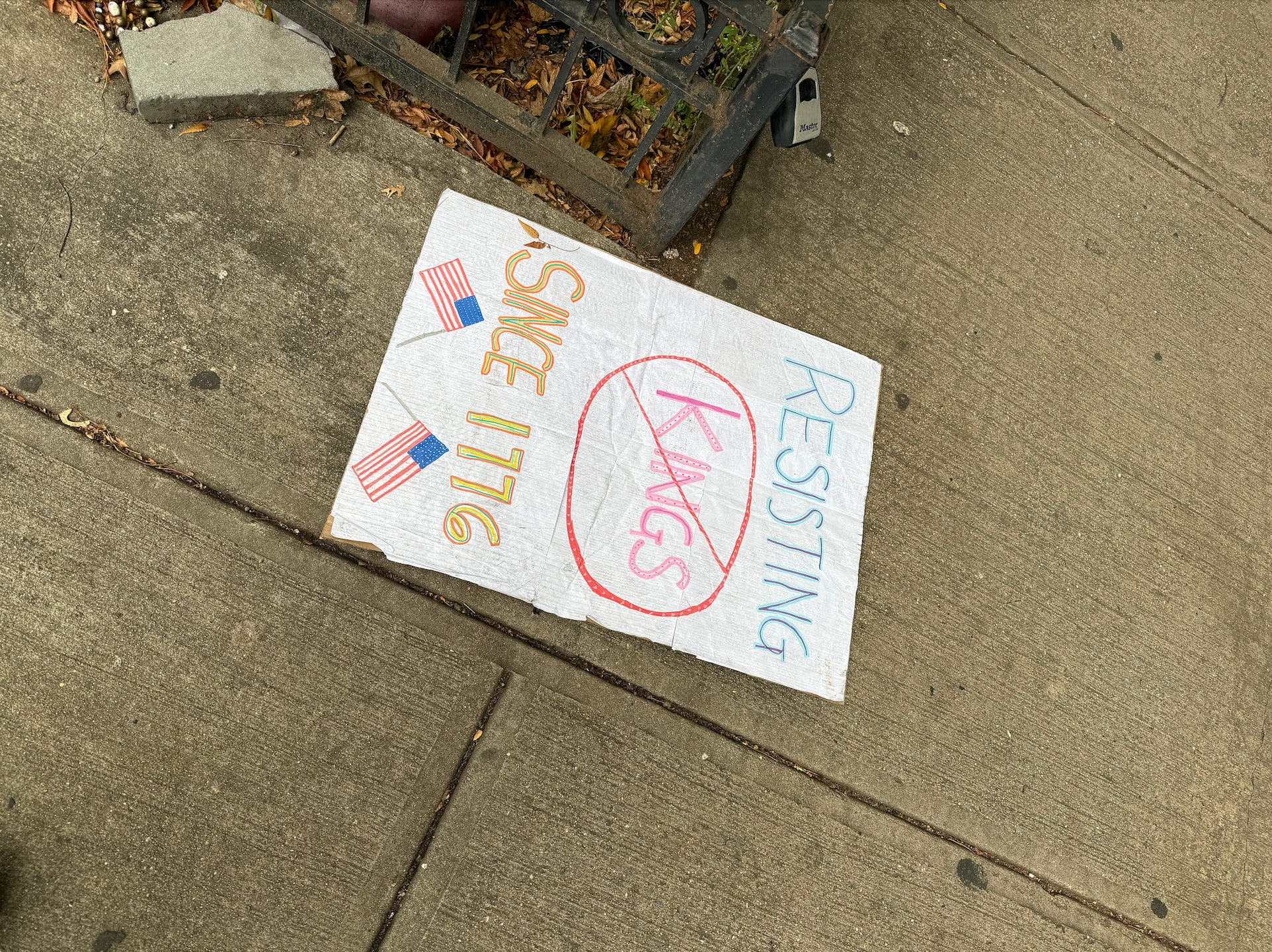
This morning I came across a discarded protest sign. Will our latest symbols of resistance go the way of the pussy hat? Will we, months from now, see it all as so very cringe? I hope not. But if we do, I hope we’ll find the strength to stomach a dose of cringe knowing that it’s in the service of a larger goal.